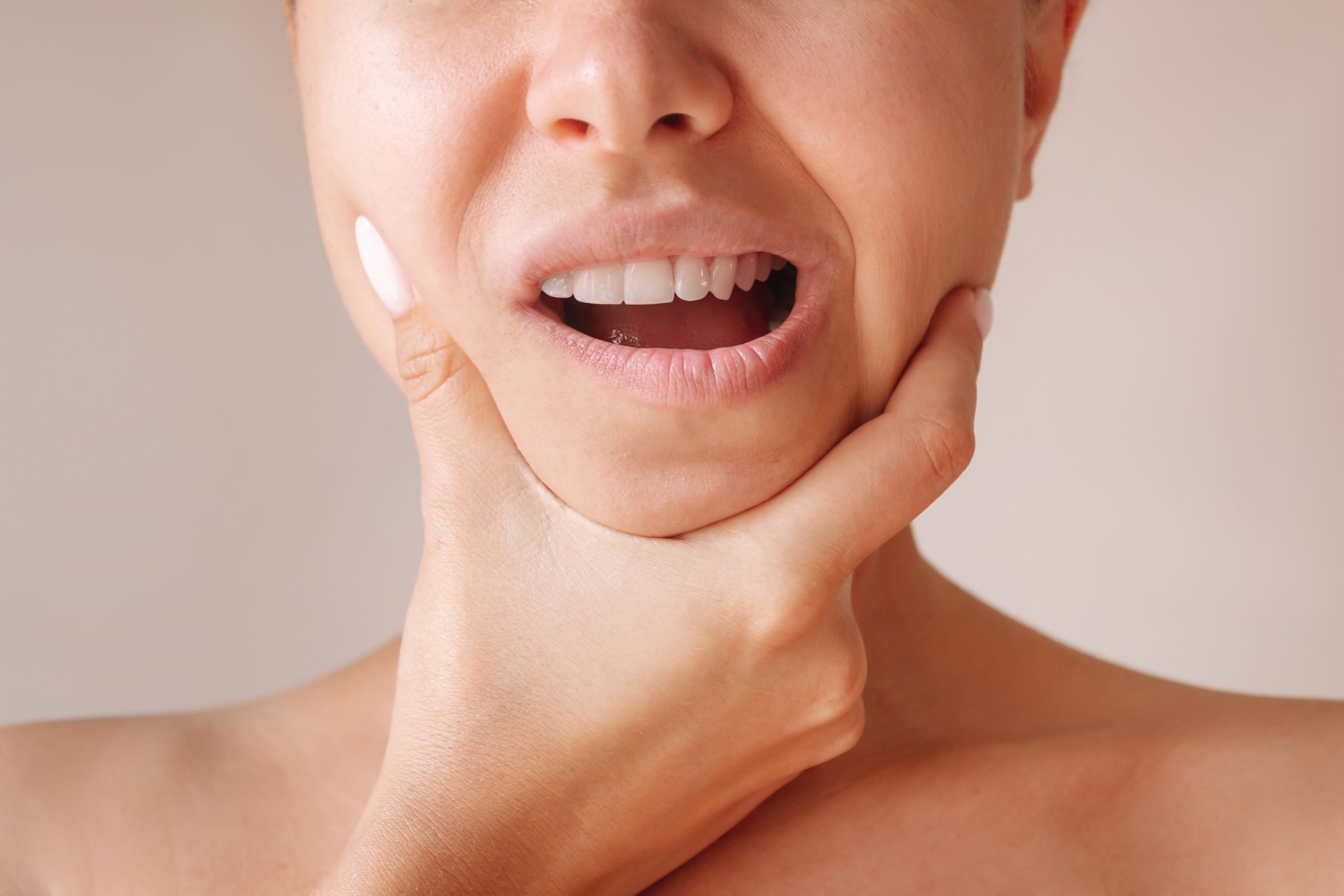
If your jaw is locked, stay calm, avoid forcing it open or shut, apply moist heat, switch to soft foods, and get evaluated by a dentist the same day – especially if you also have swelling, fever, or severe pain, which can point to an infection that needs urgent treatment. A jaw that won’t open or close normally is your body’s warning sign, and the sooner it’s examined, the easier it usually is to fix.
Jaw locking happens when the temporomandibular joint (TMJ) – the hinge in front of each ear connecting your lower jaw to your skull – stops moving smoothly, or when the muscles controlling the jaw spasm and clench. The jaw may get stuck open and refuse to close, or stick closed so you can only open a small gap. Some people can ease it back into place; others cannot move it at all.
Treat it as an emergency and call right away if you have any of the following along with a locked jaw:
Swelling of the face, neck, or under the tongue
Fever or chills, which can indicate a serious infection
Trouble breathing or swallowing – this warrants a 911 call or going to the nearest emergency room
Severe, worsening pain
A jaw stuck wide open that you cannot close
Locking that follows a blow to the head or face
Swelling that spreads toward the throat is the most serious scenario, because infection near the airway can become life-threatening quickly.
Ignoring it rarely helps. A displaced joint disc can become harder to reposition over time, leaving you with permanently reduced opening. Untreated dental infections spread to other parts of the body rather than resolve. Chronic muscle guarding leads to headaches, neck pain, and worn or cracked teeth – and nutrition suffers when chewing becomes painful.
Stop forcing it. Straining against a stuck joint makes muscle spasm worse and can cause more damage.
Relax the muscles. Let your tongue rest on the roof of your mouth with teeth slightly apart, and breathe slowly.
Apply moist heat. A warm, damp towel on the side of the face for 10–20 minutes loosens tight muscles. Use a cold pack instead if there’s visible swelling or a recent injury.
Eat soft foods. Yogurt, soup, eggs, and smoothies keep you nourished without stressing the joint.
Avoid gum, chewy candy, and wide yawning.
Call a dentist the same day if it doesn’t ease within an hour or two.
Gentle self-massage: Place your fingertips on the muscles just below your cheekbones and in front of your ears, then rub in slow circles for a minute or two.
If the jaw is locked open: Place your thumbs on your lower back teeth and fingers under your chin, then gently push down on the back teeth while guiding the chin backward.
If the jaw is locked closed: Focus on warm compresses and relaxation – resting the jaw slightly forward and letting gravity guide it back down often releases the spasm.
Never use tools, spoons, or another person’s hands to pry the jaw open.
Once the jaw moves again, easy exercises can help keep it loose:
Controlled opening: Rest your tongue on the roof of your mouth and open slowly as far as comfortable, holding a few seconds. Repeat five times.
Side-to-side glide: Place an object about a quarter-inch thick between your front teeth and slide the jaw gently left and right.
Resistance hold: Put a thumb under your chin and open slowly against light pressure for a few seconds.
Do these only when they’re pain-free, and stop immediately if you feel sharp pain.
At an emergency dental exam, the dentist reviews your symptoms and medical history, measures how far your jaw opens, listens for joint sounds, checks the chewing muscles for tenderness, and inspects your back teeth for decay, cracks, or infection. X-rays reveal abscesses, impacted wisdom teeth, and bone changes in the joint.
Treatment depends entirely on the cause:
For infection: Draining an abscess, performing a root canal, or extracting the tooth to remove the source of the problem usually releases the jaw within days.
For TMD or joint problems: A custom bite guard or nightguard, anti-inflammatory medication, muscle relaxants, physical therapy, or manual repositioning of the joint.
For trauma: Realigning the jaw or repairing damaged structures.
Often, yes:
Wear a night guard if you grind or clench your teeth
Cut food into smaller pieces and avoid hard or chewy foods
Skip ice chewing and gum; support your chin when you yawn
Watch your posture – forward head position strains the jaw
Manage stress, since clenching is one of its quietest symptoms
Maintain good oral hygiene and treat cavities and cracked teeth before they turn into infections
If locking keeps returning, opening stays limited for weeks, or pain persists despite home care, ask for a referral for advanced imaging or ongoing TMJ management. In complex cases of TMD or severe joint damage, a referral to an oral and maxillofacial surgeon may be needed. Emergency care handles the acute problem; long-term joint disorders may need continued follow-up.
If your jaw is locked, don’t force it, use moist heat and soft foods, and get an exam the same day. Locking may come from the joint itself, a severe infection, or a traumatic injury – and only an exam with X-rays can tell the difference. If swelling, fever, or trouble swallowing appear, seek care immediately.
August 1, 2026

