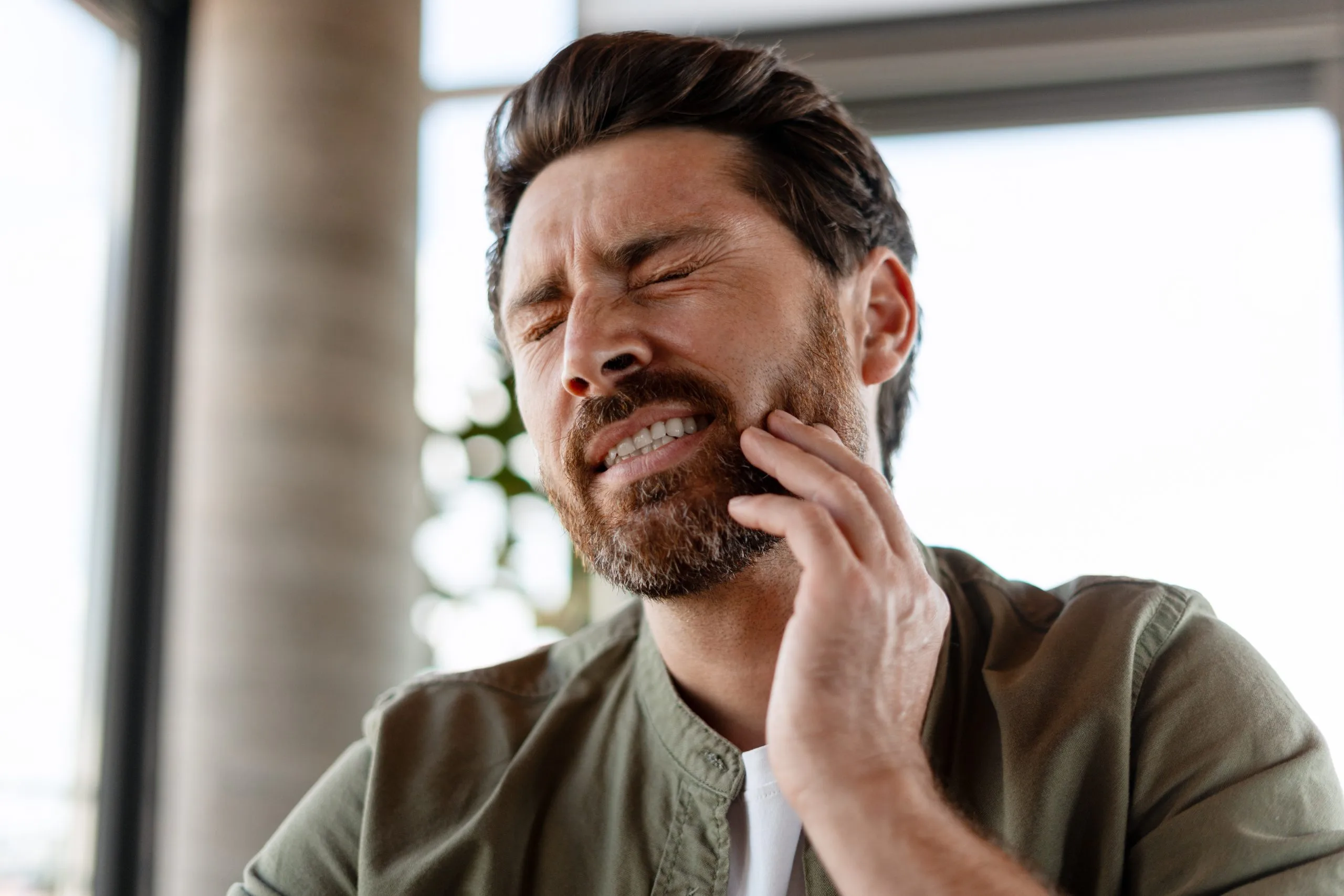
While mild sensitivity is common after a dental filling, persistent or worsening throbbing pain signals a problem that needs attention. The tooth’s nerve can stay irritated for a short time, but ongoing pain, swelling, or a loose filling should not be ignored. Urgent Dental Care offers same-day appointments seven days a week for tooth pain, broken fillings, and weekend flare-ups, including for patients who cannot reach their dentist or do not have one.
A filling treats decay, but the work still stresses the tooth. The pulp – the living tissue with nerves and blood vessels – can react with a pulse-like ache. Temperature swings and chewing can make that pulse more noticeable for a short stretch, but persistent throbbing pain after filling is not typical.
After numbness wears off, the tooth can feel taller, tender, or sensitive to hot, cold, or pressure. This mild to moderate sensitivity eases when you stop drinking or chewing. Cold air, ice water, or hot coffee can trigger a quick zing that fades in seconds.
Most people feel clearly better within a few days. Cold sensitivity may last one to two weeks after a large or deep restoration, but the trend should be down, not up.
A shallow filling in a mildly decayed tooth often settles quickly.
A deep filling near the pulp can stay cranky longer, but the throb should not intensify.
Pain that plateaus at a high level, returns after a quiet stretch, or is severe from the start indicates a problem.
Normal healing is a dull ache that is strongest the first night, then softer each day. You can sleep, over-the-counter pain relief takes the edge off, and any cold jolt is brief. Warning signs include infection, a high bite, a failing restoration, or a nerve that is not recovering.
A tooth that pounds in time with your heartbeat, especially when you lie down, often has rising pressure in the pulp or at the root tip. A swollen face or jaw after a filling is not normal healing and can mean an abscess is forming.
Spreading swelling, trouble breathing, or trouble swallowing needs emergency medical care first.
Localized but painful dental swelling requires a dentist who can examine the tooth, take images, and treat the source.
A filling that fell out can leave raw dentin or the pulp exposed, turning sensitivity into a hard throb within hours.
A lost or broken filling is treated as urgent restoration work, not a cosmetic procedure later on.
Not always. Many throbbing teeth calm down once the bite is corrected or nerve inflammation fades. A root canal removes the infected pulp, cleans the inside of the tooth, and seals it to prevent further infection.
A filling does not “cut the nerve.” Deep decay and the work needed to clean it can inflame the pulp, and a very deep restoration can push an already stressed nerve past the point of recovery.
If inflammation is mild, the pulp recovers; if it is severe, or bacteria have already reached the nerve, the pulp can die.
Dead pulp then leads to infection at the root.
Chew on the other side and avoid foods and drinks that are extremely hot, cold, or sugary.
Over-the-counter anti-inflammatory pain relievers may help a mild ache if you can take them safely – follow the label.
Rinse with warm salt water (a half-teaspoon of salt in a glass of warm water) to soothe irritated gums.
Choose lukewarm water and soft foods; skip ice, sticky candy, and hard nuts.
If a filling came out, keep the area clean and do not jam aspirin or any pain tablet against the gum – that burns the tissue.
Sleep with your head slightly elevated; lying flat can make a throb worse because more blood pressure reaches the head.
See a dentist if pain lasts more than a few days, is getting worse, or you cannot chew on that side. Go the same day for swelling, fever, a broken or missing filling, or night pain that will not let you rest.
You do not need to already be a patient of record.
Consultations and treatment are in person; walk-ins are accepted, though being seen is not guaranteed if a dentist is not available, so calling first is more reliable.
X-rays from another office that are less than three months old can be sent ahead; new images are taken when needed.
Locations in Rochester, Buffalo, Syracuse, Henrietta, and Bradenton are equipped for same-day emergency treatment.
Lingering throbbing pain is a diagnostic problem, not a guessing game. Our team of dentists will look at whether the filling, the bite, the pulp, or an infection is driving the pain.
A limited oral evaluation includes an exam and X-rays. Emergency exams show what is happening beneath the surface.
The dentist will ask when the filling was placed, whether the cavity was deep, and what triggers the pain – cold, heat, biting, or nothing at all.
A visual look checks for cracks, open margins, and gum swelling; tapping and bite tests show whether the ligament or a high spot is involved.
X-rays help show the filling’s proximity to the nerve, decay, or a gap under the restoration, and infection at the root tip, such as a dental abscess.
Nearby teeth get checked too, so a second cavity or referred pain is not missed.
Treatment follows the cause, aiming to relieve pain and provide a clear solution the same day. Extractions, root canal treatment, and abscess care are among the most common services our practice offers.
Bite adjustment: A high filling can be smoothed in a quick, painless visit so your bite meets evenly again.
Filling repair or replacement: A leaking, cracked, or lost filling can be sealed so bacteria stop reaching dentin.
Root canal therapy: If the nerve is irreversibly damaged or infected, the source of pressure is removed, and the tooth is saved.
Tooth extraction: If the tooth is too damaged to be saved, extraction may be the treatment that stops the pain and infection.
Throbbing pain after a dental filling should improve as the tooth heals – not intensify or persist without explanation. While temporary sensitivity can be normal, worsening pain, swelling, fever, a broken or missing filling, or pain that disrupts sleep warrants prompt dental evaluation. The sooner the cause is identified, whether it is a high filling, damaged restoration, or inflamed or infected pulp, the sooner appropriate treatment can relieve the pain and protect the tooth. If you cannot reach your regular dentist, same-day emergency dental care can help you get the evaluation and treatment you need.
August 28, 2026

